Animals often exhibit behaviors that baffle us: Why do dogs always circle before lying down? Why do cats suddenly run around wildly at night? Why do birds fly in neat formations? In the past, these behaviors were often considered mere "habits" and even given various mysterious explanations. However, with the development of ethology, neuroscience, and evolutionary biology, many of these once perplexing phenomena now have scientific basis.
Research has found that most animal behaviors are not accidental but rather survival strategies developed over a long period of evolution. Some behaviors help them find food, some help them avoid danger, and others are closely related to socialization, reproduction, or health. Understanding these behaviors not only helps us better care for our pets but also allows us to rediscover the rich and complex world of animals. Below, let's look at 10 common animal behaviors that scientists have successfully explained.
Why do dogs always circle before sleeping?
Many dogs circle repeatedly before lying down.
Scientists believe this behavior originates from the dog's ancestor—the wolf. 1. In the wild, wolves will trample through grass, clear away small stones, or check for danger before resting.
Although modern domestic dogs now live in human households, this instinct remains.
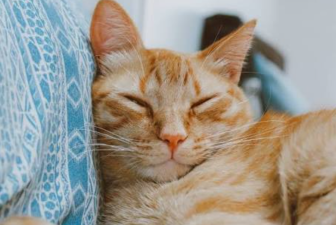
Why do cats purr?
Many people believe that cats only purr when they are happy.
In fact, research has found that cats may purr when stressed, sick, injured, or even giving birth.
Scientists believe that this low-frequency vibration not only helps cats relieve stress but also promotes bone and tissue repair, so purring may have a self-soothing effect.
Why do birds fly in a "V" formation?
During annual migrations, geese and other birds form neat V-formations.
This flight pattern utilizes the updrafts created by the birds in front, reducing air resistance and thus minimizing energy consumption during flight.
Research shows that this formation helps the entire flock fly farther and with less energy.
Why do dogs like to smell the scent left by other dogs?
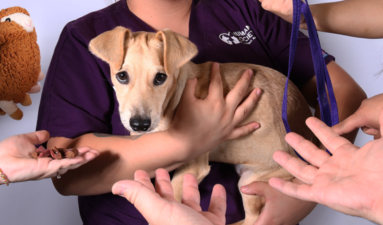
During walks, dogs often stop to sniff trees, telephone poles, or grass.
These places actually record information left by other dogs, including age, sex, health status, and even whether they are in their breeding season.
For dogs, this is like reading a "social business card."
Why do cats like to bring prey home?
Some cats bring mice, insects, and even toys to their owners.
While many owners find this unacceptable, animal behaviorists believe it's related to a cat's hunting instinct.
Mother cats bring prey back to the den to teach their kittens to hunt, and pet cats may consider their owners family members, thus retaining this behavior.
Why do penguins huddle together?
In Antarctica, penguins often gather in densely packed groups.
This behavior not only helps them withstand the cold but also allows them to take turns standing in the outer and inner circles, helping the entire group maintain a shared body temperature.
Research has found this to be a highly efficient collective survival strategy.
Why do hamsters like to hide their food?
Even with ample food, hamsters still like to stuff food into their mouths and hide it in their nests.
This is because food supplies are unstable in the wild, and storing food helps them survive periods of scarcity.
This instinct hasn't completely disappeared even in captivity.
Why do dolphins help each other?
Dolphins frequently help injured companions surface to breathe and even assist other species.
Scientists have discovered that dolphins possess highly developed brains and complex social relationships.
They can recognize companions, cooperate, and exhibit empathy, thus being considered one of the most intelligent species in the animal kingdom.
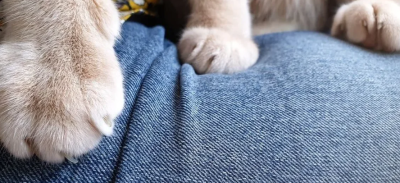
Why do cats constantly stomp on soft surfaces?
Many cats stomp on blankets, pillows, and even their owners.
This behavior can be traced back to kittenhood, where they stomp on their mother's abdomen to stimulate milk production.
As adults, this action usually indicates relaxation, security, and contentment, so many cats do this when they are comfortable.
Why do dogs always wag their tails?
Waiting a tail doesn't necessarily mean happiness. Animal behavior research has found that the direction, speed, and height of a tail's wag can all express different emotions.
For example, a relaxed, natural tail wag usually indicates friendliness, while a stiff, erect, and rapidly wagging tail may signify alertness or excitement. Therefore, judging a dog's mood requires observing its ears, eyes, and overall body posture.
What can we learn from these behaviors?
Many animal behaviors, seemingly strange, actually have clear biological meanings. Understanding these behaviors not only helps us better care for our pets but also reduces misunderstandings. For example, knowing that a cat bringing prey home is not "deliberately causing trouble" but stems from instinct; understanding that a dog constantly sniffing the roadside is gathering information, we won't rush to pull it away.
When we observe animals from a scientific perspective, we discover that they are far more intelligent than we imagine, possessing rich emotions and complex social abilities.
Conclusion
As scientific research continues to deepen, human understanding of animal behavior is becoming increasingly comprehensive. From dogs sleeping in circles to cats purring, from birds flying in formation to penguins huddling together for warmth, these once puzzling phenomena have now found reasonable explanations. While we have uncovered many secrets behind animal behavior, the animal world remains full of unknowns. In the future, with more research findings, we may discover even more fascinating stories about animal intelligence, emotions, and adaptability, and be able to better respect and cherish these lives that share the Earth with humans.