Pet Encyclopedia
Everything You Ever Wanted to Know About Pet Rabbits
In today's fast-paced modern life, keeping pets has become a popular choice for many to relax and seek companionship. Among them, rabbits, with their adorable appearance and docile temperament, are increasingly gaining popularity. If you are also interested in keeping a rabbit, or are curious about their lifestyle, please allow me to share some knowledge and care tips about rabbits to help you better understand and care for them.
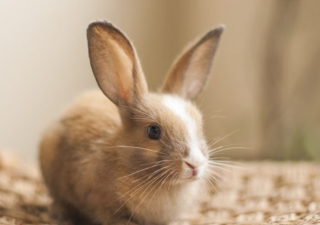
Common Pet Rabbit Breeds
French Lop Rabbit
Lop rabbits prefer quiet environments and are very timid. Even sudden noises can startle them, leading to decreased appetite and lethargy. Therefore, the primary condition for keeping a lop rabbit is providing a quiet, elegant, and comfortable living environment. During the day, besides eating, lop rabbits like to rest or sleep in their cages, but they are exceptionally active at night and eat frequently. Therefore, it is essential to consistently provide them with night hay.
Lop rabbits are very sensitive to heat because their sweat glands are underdeveloped and they cannot regulate their body temperature through sweating. Therefore, when the outside temperature is too high, lop-eared rabbits often lie on the ground to dissipate heat through ground conduction; or they increase their breathing rate to exhale heat. The suitable temperature for adult rabbits is 15-25℃, and for young rabbits, it is 30-32℃.
English Angora Rabbit
They are gentle and lovable, and will not resist being held or groomed. They are almost entirely herbivores. Because they have 28 teeth that grow continuously throughout their lives, they should not be fed mainly vegetables and fruits. Long-term consumption of these foods can easily cause dental malocclusion problems and gastrointestinal stagnation due to a lack of roughage. The idea that rabbits love carrots is a misconception, and feeding rabbits vegetables is a very outdated feeding method. The scientific feeding method is: regular and measured rabbit pellets every day, unlimited hay 24 hours a day, and a constant supply of drinking water.
Dutch Rabbit
Dutch rabbits have a V-shaped white patch on their face that extends to their chin. Small in size with relatively short ears, the Dutch rabbit is white around its nose and neck to its forepaws, while the rest of its body displays a variety of colors including black, blue, chocolate, gray, yellow (ARBA does not recognize yellow Dutch rabbits), turtle green, and copper-iron, resulting in approximately a dozen color combinations. The Dutch rabbit's highly imaginative appearance makes it a very popular pet rabbit in Europe, America, and Australia.
Dutch Lop rabbits are timid and easily startled by sudden noises, leading to a decreased appetite. Startled mothers often experience dystocia (difficult labor) or refuse to nurse their young. Besides exercise and eating, Dutch Lop rabbits prefer rest and sleep, and are easily startled by any disturbance. Therefore, a quiet environment is crucial for keeping them.
Dwarf Rabbit
The dwarf rabbit is the smallest rabbit species in North America, easily fitting in the palm of your hand. Adults weigh 246-462 grams, typically between 398-436 grams. The body length is 23.5-29.5 cm, tail length is 15-24 mm, and hind foot length is 67-76 mm. Their fur color varies from brown to dark gray, with short, rounded ears edged in white. Their ears and feet are covered in dense fur, and their tails are short. They exhibit some sexual dimorphism, with females being 1% to 10% larger than males.
The dwarf rabbit is herbivorous, primarily feeding on plants of the Artemisia genus. In winter, Artemisia makes up up to 98% of their diet. In summer and spring, their diet becomes more diverse, including more grass leaves and new foliage, as well as tender roots, tubers, bark, seeds, grains, and nuts.
Himalayan Rabbit:
The Shih Tzu, with its thick fur, looks like a warm ball of fluff, making it irresistible to approach. As a long-haired breed, Shih Tzu rabbits require extra attention to daily grooming (ideally every 2-3 days). They also tend to soil their rear end fur when defecating, so thorough cleaning is essential.
Shih Tzu rabbits:
Shih Tzu rabbits are relatively easy to care for and have a simple diet. They prefer plant-based food, and the healthiest option is usually hay and clean water. Newly weaned rabbits must be kept in a warm, clean, and dry place, ideally in a cage. Initially, 3-4 rabbits should be kept per cage. A diet consisting of a mixture of bran, soybean meal, and high-quality hay is recommended. The food should be clean and fresh. Feeding should be in small, frequent meals: green fodder three times a day, concentrated feed twice a day, and supplemented with mineral supplements.
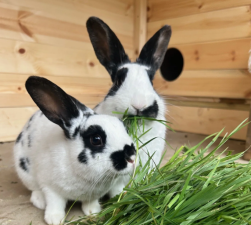
Pet Rabbit Living Environment
Housing:
You must buy a dedicated rabbit cage. If using a dog cage, be sure to buy a foot mat, as the wire mesh can cause dermatitis on rabbits' feet. The cage must be spacious enough, as adult rabbits are about 50cm tall.
You also need a rabbit-specific litter box. After some training, the rabbit will learn to relieve itself in its designated spot and won't defecate or urinate indiscriminately.
Also, provide a rabbit-specific water bottle. Rabbits won't lick water like dogs, which can cause them to choke. Note that rabbits should never be bathed, as this can cause body temperature imbalance and lead to death. If the rabbit is very dirty, gently wipe it with a towel dampened with warm water.
Hygiene:
Adult rabbits can be bathed in warm water in the summer. Remember to dry them immediately afterward.
Habits:
Rabbits must drink boiled and cooled water. If that's not available, they can drink purified water, but never mineral water or tap water.
Young rabbits are very active and will gnaw on their teeth, so you must buy them a chew stone.
The ideal temperature for adult rabbits is 25-10℃, while for baby rabbits it's 30-20℃.
Rabbits are nocturnal animals and will eat a lot of hay at night, so make sure to provide plenty of hay before they go to bed.
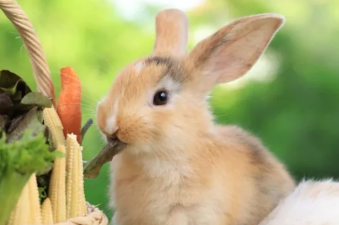
Regarding habits:
- Rabbits need to drink water. It must be boiled and cooled water; never give them tap water.
- Don't take your newly purchased rabbit out of its cage too often for the first three days. They are timid and need enough time to adjust to your home environment. You can talk to it softly nearby to let it get used to your scent and voice.
- Young rabbits are very restless. They chew on their teeth, so you must buy them a chew stone. When letting them out to play, keep a close eye on them. They will chew on cables and walls. Our rabbit chewed through many chargers. Be sure to supervise them closely. Even if the cable breaks, it could still cause electric shock or poisoning!
- Keep them warm. Young rabbits are very fragile.
- It's best not to keep rabbits in the bedroom, as it will affect your sleep. Rabbits are nocturnal animals and are very active at night, but relatively calm during the day.