Exotic Pet Guide
A Practical Guide to Keeping Pet Tortoises
Pet turtles have become increasingly popular in recent years, thanks to their unique appearance and adorable personalities, making them a common family member. As a low-maintenance pet, they are suitable for busy working professionals or first-time pet owners. However, it's essential to fully understand their habits before keeping one to avoid illness or death due to neglect. Compared to other pets, pet turtles require special care. This article provides a detailed guide to pet turtle care, helping you understand how to properly care for your little turtle friend.
Environment Setup
Creating a Dedicated Habitat for Turtles
The enclosure is crucial for a turtle's health. A glass or acrylic tank is recommended, with dimensions at least 10 times the turtle's size (e.g., a Chinese pond turtle needs at least 50cm x 30cm x 25cm). The tank should have a three-layer structure: a 20-30cm layer of coconut fiber or sphagnum moss at the bottom for digging and molting; a middle layer of driftwood or fallen wood to simulate a natural habitat; and a top layer with 15-20cm of water for swimming and basking.
Precise temperature control is crucial: Tropical turtles (such as red-eared sliders) require 25-30℃, while cold-water turtles (such as Chinese pond turtles) require 20-25℃. It is recommended to install a constant-temperature heater and a thermometer for real-time monitoring. For lighting, 8-12 hours of UVB illumination is necessary, which can be achieved with a full-spectrum lamp. Avoid direct sunlight as it can cause a sudden rise in water temperature.
Daily Care
Scientific Feeding and Water Quality Management
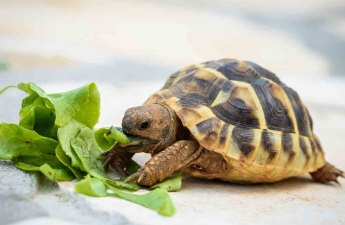
Feeding should follow the principle of "small, frequent meals." Young turtles should be fed daily, while adult turtles should be fed every other day. The diet should be high in protein and low in fat. A recommended combination is: professional turtle food (60%), live fish and shrimp (30%), and vegetables (10%), such as lettuce and carrots. Uneaten food should be removed promptly after feeding to prevent water spoilage.
Water quality management is paramount. It is recommended to use aged water (tap water left to stand for at least 3 days), changing 1/3 of the water every 2-3 days, extending to 5-7 days in winter. When changing the water, pay attention to temperature fluctuations, avoiding exceeding 3℃. Aquarium-specific water conditioner can be used to maintain a pH of 7.0-8.0 and a hardness of 100-300 ppm.
Disease Prevention
Identifying and Addressing Common Symptoms
Common diseases include white eye disease, shell rot, and pneumonia. White eye disease manifests as swollen eyelids and inability to open the eyes, requiring treatment with chloramphenicol eye drops and isolation of the affected turtle. Shell rot manifests as blackening and decay of the shell; it can be treated with iodine disinfectant followed by application of aureomycin ointment. In severe cases, the rotten tissue needs to be scraped away and an antibacterial ointment applied.
Pneumonia symptoms include rapid breathing and open-mouth breathing. The water temperature should be raised to 28-30℃, and amoxicillin baths (50 mg/L, 30 minutes/day) should be administered. Preventive measures include keeping the environment dry, avoiding large temperature fluctuations, and regularly disinfecting the enclosure.
Behavioral Observation
Deciphering the "Language" of Turtles
The behavioral characteristics of healthy turtles include: active feeding, normal crawling, and an intact shell. Be alert to unusual behaviors: refusal to eat, lethargy, floating, and shell lifting. Floating may indicate pneumonia or gastroenteritis, requiring immediate treatment; shell lifting may indicate calcium deficiency or shell damage, requiring calcium supplementation and dietary adjustments.
Regarding interaction, young turtles need 10-15 minutes of gentle stroking daily, while adult turtles can be interacted with 1-2 times per week. Avoid forcibly handling them to prevent stress.
Precautions
Common Misconceptions for Beginners
- Using tap water directly to raise turtles. Water must be aged beforehand and a dechlorinator added; otherwise, chlorine will damage the turtle's gills.
- Overfeeding. Young turtles should be fed 1/3 of their carapace area daily, while adult turtles should be fed 1/5 of their carapace area daily.
- Frequent water changes. Once the water quality stabilizes, reduce the frequency of water changes to avoid disrupting beneficial bacteria.
- Neglecting environmental richness. Hidden burrows and climbing frames should be provided in the tank to meet the turtles' exploration needs.
Feeding Precautions
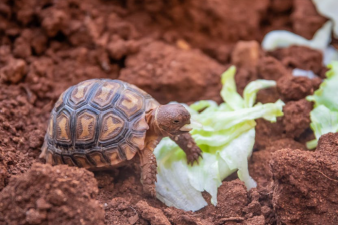
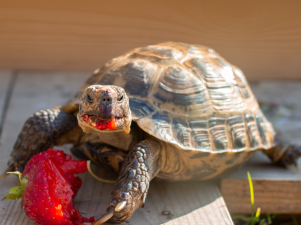
Diverse Diet: Aquatic turtles can be fed small fish and shrimp, and turtle pellets; tortoises can be fed vegetables and hay; avoid a single diet that can lead to malnutrition.
Feeding Frequency:
- Juvenile turtles: once a day; adult turtles: once every two days. Each feeding should not exceed the size of the turtle's head.
- Avoid overfeeding to prevent obesity and indigestion.
Forbidden Foods:
- Salty and oily foods (such as pork and ham) can cause edema or white eye disease.
- Frozen food should be thawed to room temperature before feeding, otherwise it can easily cause gastroenteritis.
Lighting and Sunbathing
Importance of Sunlight: Turtles need ultraviolet light (UVB) to synthesize vitamin D3, which promotes calcium absorption.
Sunbathing Method:
- Sunbathe for 15-40 minutes daily, avoiding strong midday sunlight (before 11 am or after 3 pm is best).
- Provide shaded terraces to prevent heatstroke caused by excessive sun exposure.